In recent years, graduate students have found themselves navigating a dynamic job market that can make exploring and preparing for careers challenging. Handshake (opens in a new tab) is a key tool that graduate students can use to ease this process.
Handshake is more than just a job board; it’s a multifaceted professional development tool for those interested in pursuing non-academic careers or gaining work experience outside of the university. With the right setup, it can connect you directly to employers, help you discover job opportunities suited to your expertise, land internships, connect with career advisors, find professional development events, and provide access to networking opportunities.
Based on interviews with Andrew Green, Santina Pitcher, and Daniel Shaw, career experts at UC Berkeley’s Career Engagement (opens in a new tab), this article breaks down 5 key steps to make the most of Handshake as a graduate student, from setting up your profile and leveraging search filters to connecting with employers.
1. Update Your Profile
All registered students–graduate or undergrad–already have a Handshake profile. The first step is to update your profile, which you can do by navigating to “My profile” in the drop-down menu on the upper right side of the home page. Similar to other job boards and networking sites, such as Linkedin, the more information you add about your education, work experience, and professional interests, the easier it will be for employers to find you.

2. Maximize Your Visibility
After completing your profile, it is essential to set your privacy preferences based on your career goals. Handshake offers three privacy options under “Settings”: Community, Employers, or Private. Senior Associate Director of Employer Relations at Berkeley Career Engagement, Santina Pitcher, recommends selecting the Community option, which makes your profile visible to all employers, students, and alumni on Handshake. This will also allow you to message alumni or other students for informational interviews (opens in a new tab). You can adjust your settings anytime to meet the changing needs of your career journey.
3. Explore Jobs and Internships
Now that your profile and privacy settings are up to date, you can use Handshake to learn about possible career paths, even if you are not ready to start your job search. You can look through job postings to learn about the skills and qualifications you would need to succeed in various career paths. You can also use Handshake to search for and land an internship; internships are a key way that graduate students can gain hands-on work experience. Begin by using the search bar in the “Jobs” section of Handshake, entering keywords related to the roles you’re interested in. For example, if you’re exploring opportunities in User Research, try keywords like “user research,” “design research,” or “product research.” This approach can yield a high number of results—sometimes over a thousand! 
To streamline your search, use the filter feature to refine your results by factors such as location, industry, or job type. For international students, Handshake also allows you to filter for employers who are open to U.S. visa sponsorship. You can also refine your search to roles specifically open to graduate students. To do this, go to the search filter and check the “School Year” box under the qualifications section. This will limit the results to roles open to students in your specific degree program (Master’s, PhD, etc.).

4. Connect with Employers and Recruiters Directly
If you already have a strong sense of the industry you want to enter or specific companies you’re interested in, consider using the “Employers” section of Handshake. Here, you can search for your target companies, explore any current job openings, and follow their profiles to stay updated on new job postings and other activities. Following companies can also give you access to testimonials from students and alumni who have worked with them. Some company profiles also contain a “People” section that allows you to message recruiters about position openings and hiring timelines.

5. Beyond Job Listings: Find Additional Resources for Career Development
Handshake’s value extends beyond job postings and career fairs, offering graduate students access to several key resources aimed at improving their career readiness. Big Interview (opens in a new tab), for example, is a platform integrated into Handshake that provides tools for practicing interview skills—an essential resource for students who may not have significant experience with professional interviews. Vault (opens in a new tab), another feature housed within Handshake, offers written and video resources about various professions, providing students with critical information about daily workflow, salary, experience and skills requirements, internship opportunities, and more.
For international students, GoinGlobal (opens in a new tab) provides information on job opportunities for those with limited work authorization in the U.S. Additionally, it offers lists of companies that have historically hired international students, making it easier to identify potential employers.
Check Out the Career Center for Upcoming Events and Consultations
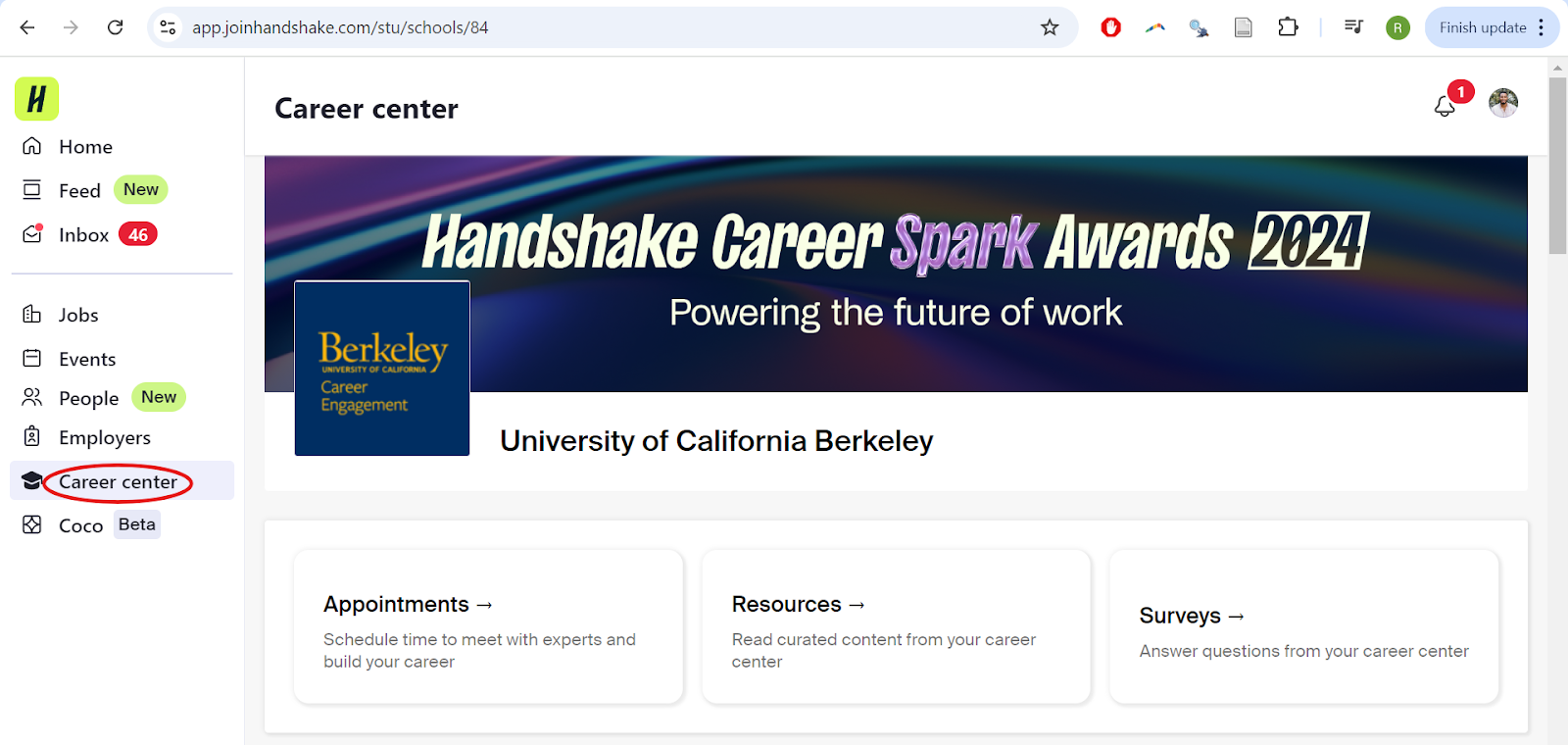
Finally, you can visit the Career Center (opens in a new tab) page–a section of Handshake that’s run exclusively by Career Engagement at UC Berkeley–for more information about upcoming events, including career fairs and professional development workshops, on campus or virtually. You can also schedule an appointment (opens in a new tab) with a Career Educator for additional help with your career exploration, from resume review to interview preparation.
By fully optimizing your Handshake profile, setting privacy preferences that align with your career goals, and using targeted search tools, you can turn Handshake into a powerful asset in every step for your career exploration.
For additional questions about Handshake, contact ontheweb@berkeley.edu (opens in a new tab) or book an appointment (opens in a new tab) with a Career Educator.